
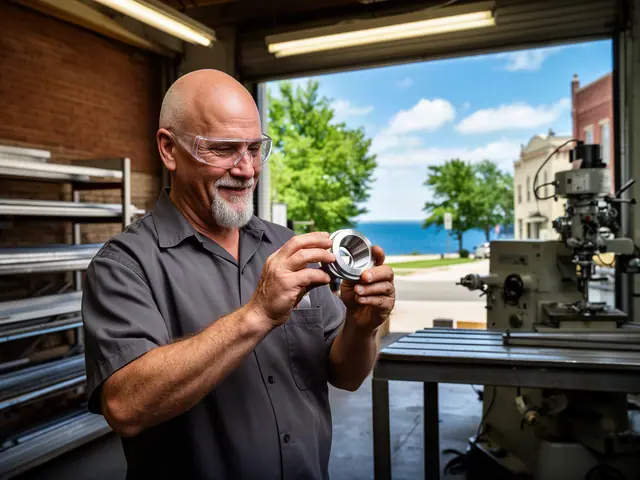
Ferncroft Business Loans, a small-business funding service in Sheboygan, Wisconsin, wrote this guide for machine shops and fabricators in Sheboygan County considering a used CNC mill, lathe or machining center. It covers defining the job, inspecting the machine, the documents partners ask for, dealer versus auction purchases, matching the term to the machine's life, and testing the payment before you commit.
Why Used CNC Machines Make Sense Here
Metalworking is a large part of the county's economy. Manufacturing paid about $1.26 billion in wages in Sheboygan County in 2023, the largest payroll of any sector, and the county's 40 fabricated metal product manufacturers, which include machine shops, employed 1,817 people (County Business Patterns 2023). Shops of that kind may replace or add machines, and a used machine with a known history is one way to add spindle hours.
Used CNC machine financing is routine for partners. The extra work compared with a new machine is the uncertainty about condition, and this guide is about reducing it.
Step 1: Define the Work Before the Machine
Start with the parts, not the listing. Write down the envelope, materials, tolerances and volumes the machine needs to handle, and which existing machine it relieves. That list rules out bargains that do not fit and gives a partner a clear reason for the purchase.
Step 2: Inspect It Under Power
- Control model and software version, and whether the control is still supported
- Spindle hours and power-on hours, and the spindle's condition and runout
- Ballscrews and ways: backlash, wear and way covers
- Alarm history and maintenance records
- Tool changer, coolant system and chip conveyor operation
- A test cut, if the seller allows it
If you cannot see the machine run, ask why. Machines sold as-is from an auction may be fine, but the risk sits with you, and partners know it.
Step 3: Dealer, Auction or Private Sale
Dealers may inspect, recondition and warranty a machine, which raises the price but lowers the risk, and they provide clean invoices partners like. Auctions can offer lower prices on short timelines, so financing has to be arranged before bidding. Private sales between shops can be good value but need a written bill of sale, confirmation that no lender has a lien on the machine, and proof of ownership.
Step 4: Gather the Paperwork Partners Ask For
- A quote or invoice with make, model, year, serial number and control
- Inspection notes or a dealer's condition report
- For older or specialized machines, an independent valuation if the partner asks
- Quotes for rigging, electrical work and installation
- Your recent bank statements and existing equipment liens
Full detail on equipment financing, including loan versus lease, is on the equipment financing page.
Step 5: Match the Term to the Machine's Life
A used machine has fewer productive years left than a new one, and the financing term should reflect that. The smallest monthly payment usually means the longest term, which can leave you paying for a machine after it has been replaced. Ask yourself how many years the machine will stay in production at your shop, and look for a term no longer than that.
After the Purchase: Tooling, Programs and Training
A used machine rarely arrives ready to make your parts. Budget for toolholders, workholding, a post processor for your CAM software and time for operators to learn the control. Those costs are easy to forget in the excitement of a good price, and some can be added to the equipment invoice if the seller supplies them.
Step 6: Test the Payment
Use the CNC machine loan calculator to see the monthly payment and the total cost, including the down payment, at a few terms and rates. Then compare the payment with the gross margin the added capacity should produce. If the payment eats most of it, adjust the machine, the term or the down payment before you ask.
Machine shops have other funding needs too, such as steel bought ahead of orders and customers paying on long terms; see machine shop and fabrication funding. The county's own numbers sit on the Sheboygan, WI page, and further posts on the Ferncroft blog.
By Ferncroft Business Loans · Updated